
Knee Replacement Questions?

Discover new, game-changing technologies that can help you start living your full life again—a more normal feeling knee,1 a smoother recovery2,3 and implants built to last.

Official joint replacement technology of the
Pro Football Hall of Fame

The ultimate knee replacement experience

The most common reasons people put off knee replacement

I don’t have time for knee replacement
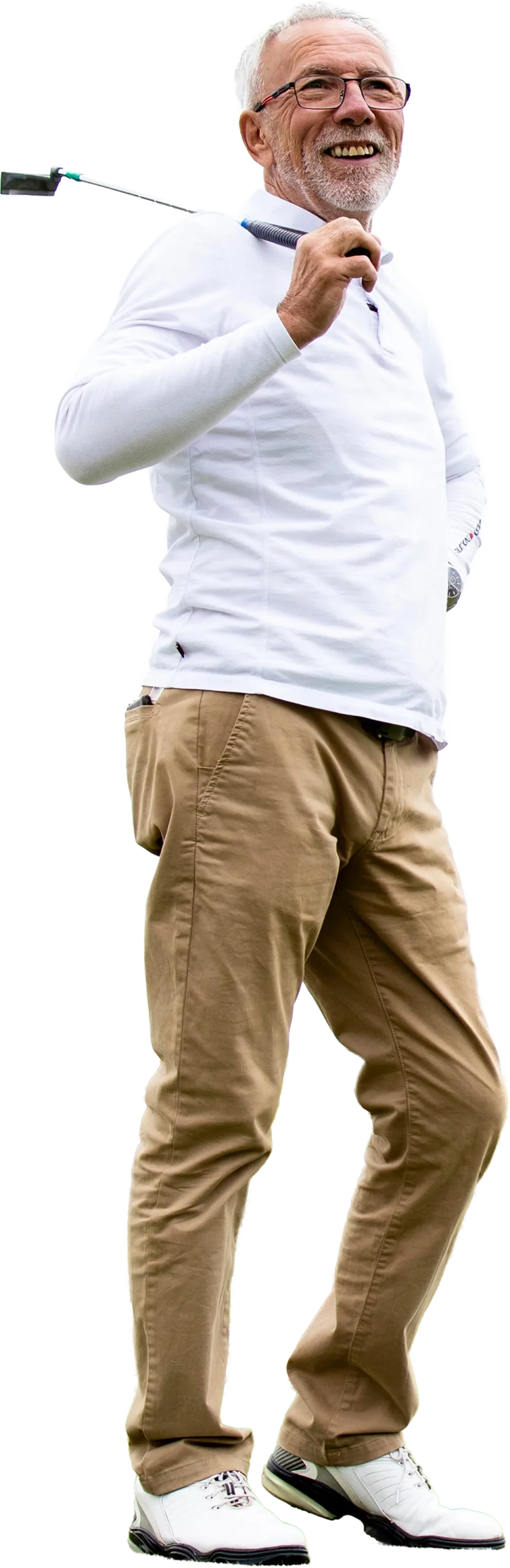
Between pre-surgery screenings and post-surgery recovery, it’s understandable to feel this way. Good news, the CORI surgical system doesn’t require the same time-consuming and costly pre-surgery scans that other systems do. Instead, it creates a digital map of your knee right in the operating room, allowing your surgeon to plan and execute your surgery to precisely match your unique anatomy. This added level of precision is designed to support a quicker, smoother recovery. In fact, most patients are up and walking the same day and back home within 24-hours.

My knee won’t feel “right” when it’s done

Your natural knee is complex. It rotates as it bends and is a key part of your overall balance and stability as you move about. Recreating these shapes and forces is key to a good outcome. The CORI Surgical System uses a special tool called a Digital Tensioner which gives your surgeon the real-time information necessary to restore the natural gaps and tensions in your knee. In other words, it helps your new knee feel balanced and stable – not too tight or too loose.

I can live with the pain I have now

This comes down to a choice only you can make. For many patients, “managing pain” means that pain is a part of their everyday life, impacting how they get around, keeping them awake and preventing them from taking part in many of the activities that help make life more enjoyable. Ultimately each patient must decide between the addressing the issue that is causing the pain or continuing to live with it knowing that it won’t go away on its own.

Schedule a consultation

Feed your curiosity

Not every orthopaedic surgeon is trained to use advanced technologies.

Omar N. Osmani, MD

Dr. Omar N. Osmani is an orthopedic surgeon with dual sub-specialty fellowship training in Spine and Joint Replacement surgery. He completed his orthopedic training at the world-renowned Kenton Leatherman Spine Center and The University of Louisville in Kentucky. In 2004 he moved to Roswell, NM and has since called it home. Dr. Osmani has been actively involved with his patients, addressing their concerns with compassion and care, and with a solid scientific foundation.

Discover the benefits

Request an appointment with us today to learn about robotics-assisted surgery that delivers a more normal feeling knee,1 a quicker, smoother recovery2,3 and an implant built to last.

How bad is your knee pain?

Answer these common, multiple choice questions to help your doctor better understand your knee pain.

Section 1 of 3

1. Which knee is causing you problems?
2. How would you describe your knee pain?

Section 2 of 3

Section 3 of 3


Most important:
Next most important:
Third most important:
Fourth most important:

You're almost done!

Print out your results

You can print your assessment answers by clicking the "Print Results" button below. A separate window will open to display your answers. Print these out and click the Find a physician button to find a physician near you. If you do not see your results, please ensure you do not have pop-up blockers enabled for this site.

Designed for Comfort, Efficiency, and Exceptional Care

Roswell Surgery Center was built with patients in mind, offering a welcoming, streamlined environment that prioritizes privacy and comfort. As a trusted alternative to hospital-based care, our facility provides easy parking, simplified check-in, and a team of experienced healthcare professionals dedicated to your well-being. Patients and physicians alike benefit from an environment carefully designed for safety, efficiency, and a personal touch.

  • State-of-the-Art Facility: featuring spacious Operating Rooms and specialized Procedure Rooms
  • Comprehensive Multi-Specialty Services: including Orthopedic Surgery, and General Surgery
  • Flexible Payment Options
  • Insurance-Friendly: proudly in-network with most managed care plans

Yes – you can

It’s time to stop settling and start getting on with your life. You can take the stairs.8 You can go for walks. You can stop being afraid. You can – with the ultimate knee replacement experience.

Schedule a consultation
VISIONAIRE
What is Knee Replacement Surgery?

If you are considering knee replacement surgery, you have plenty of company. The Agency for Healthcare Research and Quality reports that more than 600,000 knee replacements are performed each year in the United States.

VISIONAIRE
Anatomy And Function Of The Knee

The knee joint is the point at which the femur bone of the thigh meets the tibia bone of the lower leg. All the components of the knee – bones, cartilage, synovial membrane, ligaments, tendons and muscles – must work together properly for the knee to move smoothly.

VISIONAIRE
How To Talk To Your Doctor About Joint Pain

When talking to a doctor about your joint pain, it’s important to describe your symptoms clearly to make sure everyone involved is on the same page.

The information listed on this site is for informational and educational purposes and is not meant as medical advice. Every patient’s case is unique and each patient should follow his or her doctor’s specific instructions. Please discuss nutrition, medication and treatment options with your doctor to make sure you are getting the proper care for your particular situation.

◊ Trademark of Smith+Nephew. The information on this site is intended for US residents only © 2026 Smith+Nephew
Smith+Nephew Facebook Page | Follow Smith+Nephew on Twitter | Privacy & Cookies | Terms of Use

References

  1. Hall, et al. Unicompartmental knee arthroplasty (alias uni-knee): an overview with nursing implications. Orthopaedic Nursing. 2004;23(3):163-171. Accessed April 25, 2019.
    • Based on pre-surgical pain levels in UKA patients.
  2. Mayman DJ, Patel AR, Carroll KM. Hospital related clinical and economic outcomes of a bicruciate knee system in total knee arthroplasty patients. Poster presented at: ISPOR Symposium; May 19-23, 2018; Baltimore, Maryland, USA.
  3. Nodzo SR, Carroll KM, Mayman DJ. The Bicruciate Substituting Knee Design and Initial Experience. Techniques in Orthopaedics. 2018;33(1):37-41
    • Compared to non-JOURNEY II knees; Based on BCS evidence
  4. 1Short-term Range of Motion is Increased after TKA with an asymmetric bicruciatestabilized implant.AcceptedPoster Presentation, AAOS 2018 New Orleans. Kaitlin M. Carroll, Peter K. Sculco, Brian CMichaels,RichardL. Murphy, Seth A, Jerabek, David J. Mayman
  5. 2J Orthop. 2017 Jan 7;14(1):201- 206. doi: 10.1016/j.jor.2016.12.005. eCollection 2017. Bi-cruciate substituting total knee arthroplasty improved medio-lateral instability in mid-flexion range
  6.  In Vivo Kinematic Comparison of a Bicruciate Stabilized Total Knee Arthroplasty and the Normal Knee Using Fluoroscopy Trevor F. Grieco, MS a, *, Adrija Sharma, PhD a, Garett M. Dessinger, BS a, Harold E. Cates, MD b, Richard D. Komistek, PhD. The Journal of Arthroplasty, September 2017
  7. Testing concluded at 45 million cycles, ISO 14242-1 and 14243-3 define test completion at 5 million cycles. The results of laboratory wear simulation testing have not been proven to predict actual joint durability and performance in people. A reduction in wear alone may not result in improved joint durability and performance because other factors, such as bone structure, can affect joint durability and performance and cause medical conditions that may result in the need for additional surgery. These other factors were not studied as part of the testing.
  8. Iriuchishima T, Ryu K. Bicruciate substituting total knee arthroplasty improves stair climbing ability when compared with cruciate-retain or posterior stabilizing total knee arthroplasty. Indian J Orthop. 2019. doi:10.4103/ortho.IJOrtho_392_18.
  9. Smith JR, Picard F, Lonner J, et al. The accuracy of a robotically-controlled freehand sculpting tool for unicondylar knee arthroplasty. Congress of the International Society of Biomechanics. August 4-9, 2013. Natal, Brazil.
  10. Zardiackas, Lyle D., Kraay, Matthew J., Freese, Howard L, editors. Titanium, Niobium, Zirconium, and Tantalum for Medical and Surgical Applications ASTM special technical publication; 1471. Ann Arbor, MI: ASTM, Dec. 2005

The information listed on this site is for informational and educational purposes and is not meant as medical advice. Every patient’s case is unique and each patient should follow his or her doctor’s specific instructions. Please discuss nutrition, medication and treatment options with your doctor to make sure you are getting the proper care for your particular situation.

◊ Trademark of Smith+Nephew. The information on this site is intended for US residents only © 2024 Smith+Nephew

References

*Journey II BCS.

  1. Hall, et al. Unicompartmental knee arthroplasty (alias uni-knee): an overview with nursing implications. Orthopaedic Nursing. 2004;23(3):163-171. Accessed April 25, 2019.
    • Based on pre-surgical pain levels in UKA patients.
  2. Mayman DJ, Patel AR, Carroll KM. Hospital related clinical and economic outcomes of a bicruciate knee system in total knee arthroplasty patients. Poster presented at: ISPOR Symposium; May 19-23, 2018; Baltimore, Maryland, USA.
  3. Nodzo SR, Carroll KM, Mayman DJ. The Bicruciate Substituting Knee Design and Initial Experience. Techniques in Orthopaedics. 2018;33(1):37-41
    • Compared to non-JOURNEY II knees; Based on BCS evidence
  4. 1Short-term Range of Motion is Increased after TKA with an asymmetric bicruciatestabilized implant.AcceptedPoster Presentation, AAOS 2018 New Orleans. Kaitlin M. Carroll, Peter K. Sculco, Brian CMichaels,RichardL. Murphy, Seth A, Jerabek, David J. Mayman
  5. 2J Orthop. 2017 Jan 7;14(1):201- 206. doi: 10.1016/j.jor.2016.12.005. eCollection 2017. Bi-cruciate substituting total knee arthroplasty improved medio-lateral instability in mid-flexion range
  6.  In Vivo Kinematic Comparison of a Bicruciate Stabilized Total Knee Arthroplasty and the Normal Knee Using Fluoroscopy Trevor F. Grieco, MS a, *, Adrija Sharma, PhD a, Garett M. Dessinger, BS a, Harold E. Cates, MD b, Richard D. Komistek, PhD. The Journal of Arthroplasty, September 2017
  7. Testing concluded at 45 million cycles, ISO 14242-1 and 14243-3 define test completion at 5 million cycles. The results of laboratory wear simulation testing have not been proven to predict actual joint durability and performance in people. A reduction in wear alone may not result in improved joint durability and performance because other factors, such as bone structure, can affect joint durability and performance and cause medical conditions that may result in the need for additional surgery. These other factors were not studied as part of the testing.
  8. Iriuchishima T, Ryu K. Bicruciate substituting total knee arthroplasty improves stair climbing ability when compared with cruciate-retain or posterior stabilizing total knee arthroplasty. Indian J Orthop. 2019. doi:10.4103/ortho.IJOrtho_392_18.
  9. Smith JR, Picard F, Lonner J, et al. The accuracy of a robotically-controlled freehand sculpting tool for unicondylar knee arthroplasty. Congress of the International Society of Biomechanics. August 4-9, 2013. Natal, Brazil.
  10. Zardiackas, Lyle D., Kraay, Matthew J., Freese, Howard L, editors. Titanium, Niobium, Zirconium, and Tantalum for Medical and Surgical Applications ASTM special technical publication; 1471. Ann Arbor, MI: ASTM, Dec. 2005

Additional claim statements and support regarding Smith+Nephew implants and Robotics-assisted surgery

  • Implants that are built to last
  • LEGIONCR Knee with VERILAST technology was lab-tested for 45 million cycles (estimating 30 years of wear performance) and showed 81% less wear than similar 5-million cycle cobalt chrome implant.
    • Learn More
      • ISO 14243-3
      • VERILAST knee wear testing and results apply only to the VERILAST LEGION CR Primary Knee System only. Extended lab-testing for other VERILAST knee systems have not been performed. The results of laboratory wear simulation testing have not been proven to predict actual joint durability and performance in people. A reduction in wear alone may not result in improved joint durability and performance because other factors, such as bone structure, can affect joint durability and performance and cause medical conditions that may result in the need for additional surgery. These other factors were not studied as part of the testing.
  • Smith+Nephew implants may offer a more normal feeling knee
    • Based on JOURNEY II BCS knee implant
    • Learn More
      • Verstaete MA, Van Onsem S, Zambianchi F, et al. Multi-centre evaluation of knee kinematics during different activities for anatomic total knee design. Poster presented at: 2nd World Arthroplasty Congress; 19-21 April, 2018; Rome, Italy.
      • Sharma A, Dessinger G, Cates H, Komistesk R. In vivo kinematic comparison for subjects having a bi-cruciate substituting TKA vs the normal knee. Poster presented at: 2nd World Arthroplasty Congress; 19-21 April, 2018; Rome, Italy.
      • Kosse NM, Heesterbeek PJC, Defoort KC, Wymenga AB, van Hellemondt GG. Improved maximal flexion after minor adaptations in implant design bicruciate-substituted total knee arthroplasty. Poster presented at 19th Congress of the European Federation of National Associations of Orthopaedics and Traumatology (EFORT); May 30 – June 1 2018; Barcelona, Spain.
  • 89% of patients were able to take the stairs again after surgery.
    • Based on JOURNEY II BCS knee implant patients
      • Iriuchishima T and Ryu K. Bicruciate substituting total knee arthroplasty improves stair climbing ability when compared with cruciate-retain or posterior stabilizing total knee arthroplasty. Indian J Orthop. 2019. DOI:10.4103/ortho.IJOrtho_392_18
  • A robotics-assisted knee replacement with Smith+Nephew implants may get you back in the game six months sooner than traditional knee replacement surgery
    • Based on UKA patients
      • Canetti R, Batailler C, Bankhead C, Neyret P, Servien E, Lustig S. Faster return to sport after robotic-assisted lateral unicompartmental knee arthroplasty: a comparative study. Arch Orthop Trauma Surg. 2018;138(12):1765-1771
  • Over 90% of patients who had a Smith+Nephew knee replacement surgery returned to work within 6 months.
      • Harris AI, Luo TD, Lang JE, Kopjar B. Short-term safety and effectiveness of a second-generation motion-guided total knee system. Arthroplast Today. 2018;4:240–243. 1
  • Robotics-assisted surgery with Smith+Nephew implants may lead to a faster rehabilitation and shorter recovery time than traditional knee surgery when following your doctor’s recovery plan and physical therapy recommendations.
    • Claim 19 & 20 (PCS REC.015)
  • Due to its improved accuracy, Smith+Nephew robotics-assisted UKA has lower revision rates* compared to conventional techniques
    • Shown in clinical studies with follow-up of up to 5.5 years
      • Batailler C, White N, Ranaldi FM, Neyret P, Servien E, Lustig S. Improved implant position and lower revision rate with robotic-assisted unicompartmental knee arthroplasty. Knee Surg Sports Traumatol Arthrosc. 2019;27(4):1232-1240.
      • Battenberg AK, Netravali NA, Lonner JH. A novel handheld robotic-assisted system for unicompartmental knee arthroplasty: surgical technique and early survivorship. J Robot Surg. 2019;14(1):55-60.
      • Gregori A. 5 Yr Experience Semi Active Robotic Partial Knee Replacement: The Financial Impact. Poster presented at: SICOT;October, 2018; Montreal, Canada.
  • A study has shown Smith+Nephew robotic technology has demonstrated faster return to sport (4.2 vs 10.5 months) when compared to conventional techniques*
        • *n= 28 (n=11 robotic procedures), p<0.01
          • Canetti R, Batailler C, Bankhead C, Neyret P, Servien E, Lustig S. Faster return to sport after robotic-assisted lateral unicompartmental knee arthroplasty: a comparative study. Arch Orthop Trauma Surg. 2018;138(12):1765-1771
  • Robotics-assisted surgery with Smith+Nephew implants may help patient get discharged sooner
    • Study of UKA patients
      • Sephton BM, et al. EKS Arthroplasty Conference. May 2-3, 2019; Valencia, Spain.
      • Shearman AD, et al. EKS Arthroplasty Conference. May 2-3, 2019; Valencia, Spain.
  • Robotics-assisted surgery with Smith+Nephew implants may provide patients with a smoother recovery
    • Based on JOURNEY II family of implants
      • Mayman DJ, Patel AR, Carroll KM. Hospital Related Clinical and Economic Outcomes of a Bicruciate Knee System in Total Knee Arthroplasty Patients. Poster presented at: ISPOR Symposium; May 19-23, 2018; Baltimore, Maryland, USA.
  • Robotics-assisted surgery with Smith+Nephew implants may help patients regain function faster
      • Shearman AD, et al. EKS Arthroplasty Conference. May 2-3, 2019; Valencia, Spain.

Additional statements and support regarding Knee Replacement

  • More than 90% of people who have knee replacement surgery experience dramatic relief in knee pain and are better able to perform common activities.
    • Based on pre-surgical pain levels
      • American Academy of Orthopaedic Surgeon website, http://orthoinfo.aaos.org/topic.cfm
  • The majority of patients experience profound improvements in their physical activity after having knee replacement surgery.
    • Based on pre-surgical activity levels
      • Brandes M, et. al., “Changes in physical activity and health-related quality of life during the first year after total knee arthroplasty.” Clin Orthop Relat Res. 1991 Dec;(273):151-6. https://www.ncbi.nlm.nih.gov/pubmed/20981812 Accessed Wednesday, April 17, 2019